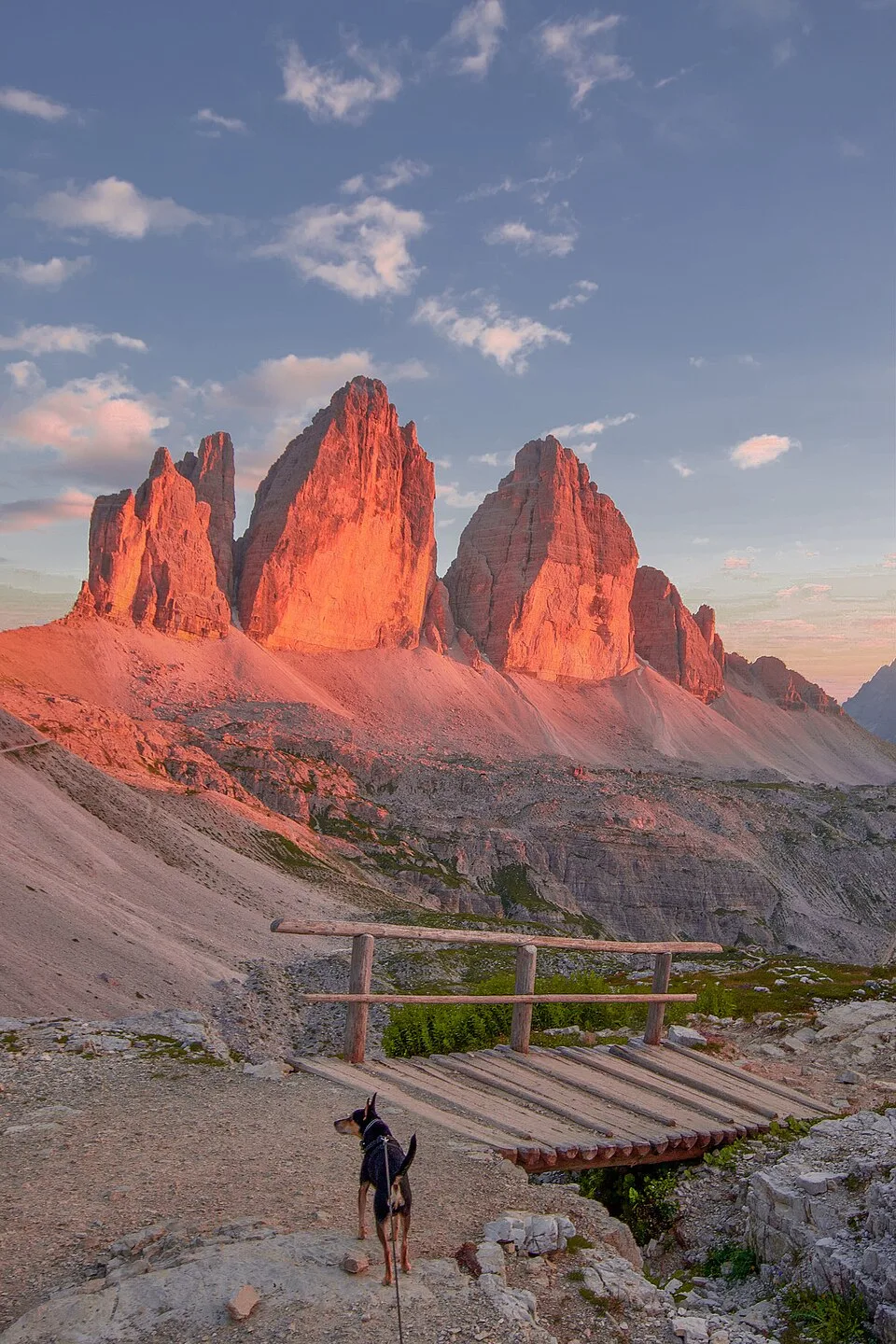
Best ski hotels in the Dolomites — Val Gardena, Cortina and Alta Badia
The Dolomites' ski accommodation is the finest in Italy — ski-in ski-out chalets connected directly to the Dolomiti Superski network (1,200km of linked pistes across 12 ski areas, the largest connected ski area in the world), with the specific quality of staying inside the UNESCO World Heritage mountain landscape. Here is the complete honest guide.
Dolomiti Superski1,200km linked pistes — the world's largest connected ski area
Rosa AlpinaAlta Badia — the benchmark Dolomites ski hotel, €700-1,500/night
CristalloCortina d'Ampezzo — the historic grande dame, €500-1,200
Adler DolomitiVal Gardena — spa + ski-in ski-out, €400-900
Best seasonJanuary-March for snow; December for atmosphere
Book DecemberChristmas-New Year and February school holidays book 6+ months ahead
What are the best ski hotels in the Dolomites and how do they compare?
Rosa Alpina Hotel and Spa (Strada Micurà de Rü 20, San Cassiano — Alta Badia, €700-1,500/night): Consistently voted the finest ski hotel in the Dolomites — a converted farmhouse expanded to 51 rooms, directly beside the Alta Badia ski area lifts (the Piz La Ila and La Villa piste system connecting to the Sella Ronda circuit). The St. Hubertus restaurant (two Michelin stars) operates within the hotel. Alta Badia is widely considered the Dolomites' finest ski area for intermediate skiers — the Gran Risa downhill course (used for World Cup events) is challenging; the wide-piste network from La Villa to Corvara is exceptional. Cristallo Resort and Spa (Via Rinaldo Batacchi 43, Cortina d'Ampezzo — €500-1,200/night): The most historic grande-dame hotel in the Dolomites — opened 1901, rebuilt after WWII, maintaining the Belle Époque style. Cortina (host to the 1956 Winter Olympics and planned host of the 2026 Winter Olympics) is the most fashionable Italian ski resort. The Cortina ski area (120km of pistes) is less extensive than Alta Badia but has the most extraordinary Dolomite landscape views, the highest piste quality, and the best après-ski. The Cristallo's pool-sauna complex and the direct access to the Socrepes lift system make it functionally ski-in ski-out. Adler Dolomiti Spa and Sport Resort (Ortisei, Val Gardena — €400-900/night): Val Gardena has the largest ski area in the Dolomites (175km of pistes, the SECEDA cable car giving access to the extraordinary Geisler ridge views) and the Adler is the best-positioned large-format spa hotel. The Val Gardena Ski World Cup Downhill (the most demanding downhill on the World Cup circuit, held annually in December) passes through the valley — staying at the Adler during the downhill week gives a specific atmosphere of professional ski racing.
📜 How the Dolomites became Italy's ski capital — Cortina's 1956 Winter Olympics and the Dolomiti Superski revolution
The Dolomites' transformation into Italy's premier ski destination was accelerated by two specific events. The first: the 1956 Winter Olympics at Cortina d'Ampezzo — the first post-WWII Winter Olympics to be televised (by RAI, Italy's national broadcaster), bringing international attention to Cortina's extraordinary landscape and establishing it as Europe's most glamorous ski resort. The specific television effect: approximately 60 million Europeans watched the 1956 Cortina games on television (the first large-scale sports broadcast in Europe) — the Dolomite landscape, the specific quality of the alpine light on the Tofane and Cristallo massifs, and the glamour of the Italian aristocracy and international jet set present at Cortina created an aspirational destination image that was reinforced through the ski tourism boom of the 1960s-70s. The second: the establishment of the Dolomiti Superski consortium in 1974 — the decision by 12 independent Dolomite ski areas to create a single lift pass covering the entire network. This was the first linked ski pass of its scale in the world, predating the French Espace Killy and the Swiss Magic Pass systems. The specific commercial logic: no individual Dolomite ski area was large enough to compete with the French mega-resorts (Les Arcs, Tignes, La Plagne) that were being developed in the same period — but the combined network (now 1,200km) exceeds any single connected ski area in France or Switzerland. The 2026 Winter Olympics (jointly hosted by Milan-Cortina) will bring the spotlight back to Cortina 70 years after the 1956 games.
More Dolomites ski and mountain guides
What are Italy's best accommodation experiences outside the standard hotel?
Ten Italian accommodation experiences that change how you understand the country: (1) Agriturismo in Tuscany or Umbria: the farm-stay system (legally regulated since 1985) allows visitors to stay on working farms — olive, wine, or livestock — with meals from the farm's own production. The best: Spannocchia (near Siena — a 1,100-acre medieval estate with Chianina cattle, heritage pig breeds, and a working olive mill; €150-250/night half-board), Fattoria La Vialla (near Arezzo — the most complete organic farm in Italy, with tastings, tours, and meals from own production). The specific quality of agriturismo at its best: you eat at the same table as the farming family, the vegetables came from the garden that morning, the wine was bottled on the property. (2) Borghi diffusi (scattered village hotels): several Italian abandoned hill villages have been converted to accommodation by distributing rooms across multiple buildings of the restored village — Sextantio in Santo Stefano di Sessanio (Abruzzo, the finest example), Albergo Diffuso Borgotufi (Molise), and Borgo Egnazia in Puglia (the most luxurious). The specific experience: checking into a medieval village and inhabiting it as a resident rather than a hotel guest. (3) Cave hotels in Matera: the sassi (the cave-house districts of Matera) have been converted to extraordinary underground cave hotels — Sextantio Le Grotte della Civita and Corte San Pietro are carved directly into the tufa rock, with breakfast served in a cave dining room lit by candles. (4) Masserie in Puglia: the fortified working farms of Salento and the Valle d'Itria (originally built as defensible agricultural fortresses against Saracen raids) converted to luxury accommodation — Masseria Torre Coccaro and Masseria San Domenico are the benchmarks; the combination of fortified Baroque architecture, organic farming, and seawater spas is specific to Puglia. (5) Rifugio stays in the Dolomites: the mountain hut network (rifugi) above the Dolomites tree line gives access to the sunrise and sunset light on the rock faces that day hikers miss — the Rifugio Lagazuoi (above the Falzarego Pass), the Rifugio Nuvolau (the most dramatically positioned hut in the Dolomites, on a rock pinnacle at 2,575m), and the Rifugio Scotoni (in the Fanis valley) are the reference addresses for overnight Dolomite stays (€50-100/person half-board). (6) Palazzo hotels in Palermo and Lecce: several Baroque palazzi in Sicily and Puglia have been converted to boutique hotels — Palazzo Brunaccini in Palermo (a 17th-century palazzo in the Ballarò market area) and Palazzo Rollo in Lecce (a family-operated noble palazzo in the centro storico) give a quality of architectural experience that a standard hotel never can. (7) Converted lighthouses: the Faro di Capo Spartivento (Sardinia's southernmost point — one of Italy's only lighthouse-hotel conversions, with the original keeper's quarters as suites and the lighthouse mechanism still operational) and the Faro di Punta Carena (Capri) give a specific experience of isolation within reach of civilization. (8) Wine estate hotels in Piedmont: the Langhe wine estates (Barolo and Barbaresco country) have the most refined combination of landscape, gastronomy, and viticulture in Italy — Castello di Castiglione Falletto (above the Barolo crus, with the entire wine geography visible from the terrace), Guido Ristorante at the Fontanafredda estate, and the Relais San Maurizio (with the most panoramic Langhe view from any hotel terrace) represent the specific Piedmontese agritourism tradition at its most sophisticated. (9) Trabocchi accommodation on the Adriatic: the wooden fishing platforms extending over the Adriatic Sea on the Trabocchi Coast (Abruzzo) have been converted to restaurants (a few hours, by reservation) and one or two to overnight accommodation — the specific experience of sleeping in a structure built on wooden pilings above the sea is available at Trabocco Cungarelle. (10) Trullo hotels in Puglia: as described in the main article — the most distinctively Italian accommodation type outside the cave hotels of Matera.
What are Italy's most misunderstood food traditions and what should every visitor know?
Ten Italian food facts that most visitors never learn: (1) Italian breakfast is not what most tourists order. The genuine Italian breakfast is a cornetto (not a croissant — a slightly sweet, softer pastry) and a cappuccino or espresso, consumed in 5 minutes standing at the bar. The tourist hotel buffet with eggs, bacon, and orange juice is a commercial accommodation of foreign expectation, not an Italian tradition. (2) Cappuccino is a morning drink only. Ordering a cappuccino after noon or after a meal marks you immediately as a non-Italian — the Italian belief is that milk interferes with digestion after food. Espresso after lunch and dinner is the correct Italian pattern. (3) Pasta is served al dente. In genuine Italian restaurants, pasta is cooked to remain slightly firm at the center (al dente, "to the tooth"). Requesting pasta "well done" (ben cotto) is unusual and some restaurants will decline. The overcooked pasta served in tourist-facing restaurants is a commercial adjustment. (4) Pizza should be eaten with a knife and fork in a sit-down restaurant — using the hands is acceptable at a pizza al taglio (by-the-slice) counter but considered informal at a table. (5) The coperto (cover charge) is legal and standard. The €1.50-3 per person charge appearing on your restaurant bill as "coperto" or "pane e coperto" is not a scam — it is a legally regulated charge for bread, water, and table service. Refusing to pay it is incorrect. (6) Acqua naturale vs frizzante matters. Water in Italian restaurants is always ordered by specifying still (naturale) or sparkling (frizzante). Tap water (acqua del rubinetto) is drinkable everywhere in Italy and can be requested. (7) The menu turistico is always inferior. The fixed-price tourist menu (typically €12-20 for three courses) uses the lowest-cost ingredients and the fastest preparation. The regular menu at the same restaurant will always be better. (8) Pesto genovese contains no cream. The Ligurian original (basil, pine nuts, Parmigiano, Pecorino, olive oil, garlic) contains no cream — cream-based "pesto" is an international restaurant adaptation. In Liguria, pesto is served with trofie or trenette pasta, with the addition of green beans and sliced potato (boiled in the pasta water). (9) Tiramisu was invented in 1971. The restaurant Le Beccherie in Treviso (Roberto Linguanotto and Alba Campeol) created the dish in 1971 — it is not an ancient Italian dessert but a 50-year-old invention that spread globally in the 1980s. (10) The Aperol Spritz is from Padova, not Venice. The Aperol Spritz (Prosecco + Aperol + soda water + orange slice) was created in the Veneto region — the specific Padua-Treviso aperitivo culture of the 1950s-60s developed the spritz format that became global in the 2010s. Ordering a Spritz in Venice is fine, but it's not a "Venetian" drink historically.
💡 The most underrated Italy planning decision — when to arrive in each city: Arriving in a city in the early afternoon (12pm-2pm) gives you the worst possible introduction — the combination of maximum heat, maximum tourist density, and the specific post-lunch Italian quietness (many small shops and restaurants close from 1-4pm). Arriving in the late afternoon (4-6pm) gives you the golden light, the beginning of the aperitivo hour, and the specific Italian urban energy of the early evening. If your flight or train arrives at noon, the best strategy is to deposit luggage at the hotel (most hotels offer baggage storage before check-in) and find a good bar for lunch and espresso, reading until 4pm. The city you encounter at 4:30pm is a qualitatively different experience from the city at 1:30pm.
What are Italy's most important local customs around accommodation that visitors should know?
Eight Italy accommodation customs that guidebooks consistently omit: (1) Check-in is typically 2-3pm, but early arrival luggage storage is always available — every Italian hotel, from 2-star to 5-star, will store luggage before check-in and after check-out. The standard phrase: "Posso lasciare il bagaglio?" (Can I leave my luggage?) always gets a yes. (2) Tourist tax (tassa di soggiorno) is never included in the booking price. The Italian tourist tax (€1-7/person/night depending on city and hotel category) is always charged separately at checkout. Rome charges €3-7; Florence €2-5; Venice €3-5. Budget for this additional cost when planning. (3) Breakfast is often better quality at a nearby bar than at the hotel. Italian hotel breakfast (especially at 3-star hotels) is typically a buffet of packaged pastries, factory-made jam, and UHT milk. The bar around the corner makes a fresh cornetto and proper espresso at half the price and twice the quality. (4) Air conditioning in Italy is not always powerful. Italian buildings have thick walls designed to stay cool passively — many smaller hotels have air conditioning units that struggle in July-August heat. In summer, request a north-facing or higher-floor room. (5) The hairdryer and adaptor situation: Italian plugs are the standard European two-round-pin Schuko type; most Italian hotels have adaptors available at reception. UK visitors need a Europe adaptor; US visitors need a voltage converter if their devices don't accept 220V (most modern electronics do). (6) Hot water limitations in older properties: agriturismo and smaller hotels in historic buildings sometimes have limited hot water — the morning rush (7-9am) can exhaust the supply. Shower early or late. (7) The no-street-shoes rule at some Amalfi and Lake Como villas: High-end Amalfi and Como villa rentals often request no street shoes inside the villa — the white marble and limestone floors mark easily. Most rentals provide house slippers. (8) Noise in Italian towns: Italian civic life is conducted at a higher volume than northern European norms — street life below hotel windows (bar conversations, Vespa acceleration, delivery truck reversing alarms) typically runs from 6am to midnight. Request an internal courtyard room in Italian town-center hotels if noise sensitivity is an issue.
Plan your Italian trip — free
Our AI builds a day-by-day itinerary with real transport, real opening times, real prices.
Build my itinerary →