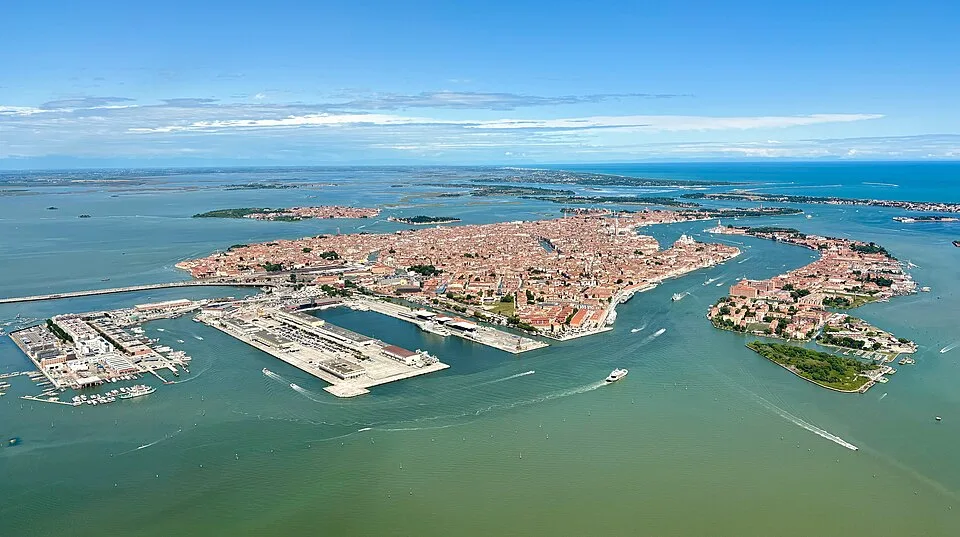
Best time to visit Venice 2026 — the complete month-by-month guide
Venice is the Italian city most distorted by seasonal variation: August has 80,000 visitors/day on a city of 50,000 residents; January has 8,000 visitors/day and the specific winter fog that Canaletto painted. The acqua alta (the high water flooding) season runs November-January. The Venice Carnival is February. The film festival is September. Here is the complete honest guide to every month.
Best: October-November22°C in October, the lagoon light, the Biennale open, the film festival just ended; the best balance in Venice
Best for atmosphere: January8,000 visitors/day vs 80,000 in August; the winter fog, the empty Piazza San Marco, the €70 hotels
Carnival: FebruaryThe Venice Carnival (2026: February 7-17) — the masked balls, the free public events, the specific Venice winter visual
Film Festival: SeptemberThe Venice Film Festival (first week of September) — the Lido island, the celebrity boats, the free screenings
Acqua Alta: Nov-JanThe high-water flooding — typically 60-80 events/year; the Piazza San Marco floods at +80cm; rubber boots at every shop
Worst: August80,000 visitors/day; 38°C in the narrow calli; the vaporetti overcrowded; hotels at 4x the January price
What is the complete best time to visit Venice guide — the crowd data, the acqua alta reality, and what each season actually offers?
January-February — the authentic Venice window: Venice in January-February: the visitor numbers drop to 8,000-12,000/day (vs 70,000-80,000 in peak summer) — the practical effect: the Piazza San Marco at 8am in January has the specific empty-square quality (the pigeons, the 2-3 other photographers, the café waiters setting the tables) that is the Venice experience before mass tourism; the accommodation price: hotels in January at €70-120/night that cost €300-500 in July-August; the Carnival (the Venice Carnival (Carnevale di Venezia) in 2026: Ash Wednesday falls on February 18, making the Carnival period February 7-17): (1) The specific Carnival visual: the masked figures (the "maschere") in the traditional Venetian costumes (the "bauta" — the 18th-century domino mask and cape; the "moretta" — the oval black mask; the "Colombina" — the half-face decorated mask) walking the Calle Larga San Marco and the Campo Santo Stefano in the morning (before the tourist day begins) with the winter fog and the empty calles behind them is the specific Venice February visual; (2) The Carnival events: the "Volo dell'Angelo" (the Angel Flight — on Carnival Sunday (February 15 in 2026), a person in costume descends by wire from the Campanile of San Marco to the Piazza at 11am; free public event; arrive at the Piazza by 9:30am for a standing position); the masked balls (the private balls at the Ca' Rezzonico (€350-500/person), the Palazzo Pisani Moretta (€600-800/person) — Venice's most exclusive private masked ball; by invitation or through ticket agencies). The acqua alta — the honest flooding guide: The Acqua Alta (the "high water" — the seasonal flooding of Venice caused by the combination of the Adriatic sea tides, the wind-driven water surge from the Bora and Sirocco, and the seiches (the oscillating standing waves) in the Adriatic): (1) The statistics: Venice experiences 60-80 acqua alta events per year (defined as water level above +80cm above sea level — the level at which the Piazza San Marco floods); the most severe events (above +120cm) occur 5-10 times per year, typically in November-January; (2) The MOSE system (the Modulo Sperimentale Elettromeccanico — the mobile flood barrier system installed at the 3 Venice lagoon inlets (Chioggia, Malamocco, and Lido) in 2020 after 16 years of construction): the MOSE raises 78 hinged metal barriers across the lagoon inlets when the forecast exceeds +110cm; the barrier has been raised 40+ times since activation and has prevented flooding in all events above +110cm; (3) The visitor practical reality: acqua alta events below +100cm flood only the lowest parts of the city (the Piazza San Marco is the lowest point in Venice and floods at +80cm); the rest of the city is accessible on the elevated pedestrian walkways (the "passerelle" — the portable metal platforms deployed by the Venezia municipality across the main pedestrian routes within 2-3 hours of the forecast; the flood forecast is published by the Centro Maree di Venezia at comune.venezia.it and sent as SMS alerts); rubber boots are sold and rented at every Venice shop and news stand for €5-15. September — the film festival and the post-summer Venice: Venice Film Festival (the 83rd Mostra Internazionale d'Arte Cinematografica di Venezia — Venice International Film Festival; annually from the last Wednesday of August to the first Saturday of September (2026 dates: August 26-September 5, tbc at labiennale.org/en/cinema)): (1) The Lido (the barrier island 30 minutes by vaporetto from Venice — the specific Film Festival atmosphere on the Lido: the press accreditation holders, the publicists, the directors, and the film industry at the Hotel Excelsior and the Palazzo del Cinema): the Lido is separate from Venice and the Film Festival does not significantly crowd the main Venice island; (2) The free screenings: the Sala Darsena (the outdoor screening venue with free public admission — the specific free event that puts the Lido atmosphere within reach of non-accredited visitors; tickets (free) are available 1h before each screening at the Sala Darsena box office; the queue for popular free screenings is 30-45 minutes). October-November — the resident's Venice: October in Venice: the air temperature 18-22°C; the Biennale (the International Art Exhibition — the Venice Biennale in 2026 runs until November 23; the Giardini pavilions and the Arsenale are the main venues; single entry €30; all-exhibition €35); the lagoon light (the specific October Venetian light — the low autumn sun illuminates the lagoon surface at a flat angle, producing the specific silver-gold sheen on the water that Canaletto and Turner both painted and that the summer vertical sun never produces); the crowd reduction (October: 25,000-30,000 visitors/day vs 70,000+ in August). The specific Venice summer survival guide (for those who have no choice): If visiting in July-August: (1) Leave the hotel by 7am — the Piazza San Marco at 7am has 200 people; by 9am it has 5,000; (2) Visit the Dorsoduro (the residential southern sestiere — the Campo Santa Margherita at 8am has the specific student-and-resident Venice energy before the tourist day begins); (3) Take the vaporetto to Torcello for the morning (the island is 40 minutes from Venice by vaporetto and has 500 visitors/day vs 70,000 in central Venice — the Santa Maria Assunta Cathedral mosaic programme is the equivalent in quality of the San Marco Basilica with 1% of the crowd).
📜 L'acqua alta e il MOSE — come 16 anni di costruzione e 7 miliardi di euro hanno creato il sistema di difesa idraulica più controverso d'Europa
Il MOSE (il sistema di barriere mobili alle bocche di porto della Laguna di Venezia — Bocca di Chioggia, Bocca di Malamocco, e Bocca di Lido) fu approvato dal CIPE (il Comitato Interministeriale per la Programmazione Economica) nel 2003 e completato nel 2020, con un costo finale di 5.493 milioni di euro contro la previsione iniziale di 1.842 milioni di euro nel 2003 (il costo è triplicato in 17 anni). La specificità dello scandalo del MOSE: nel 2014, l'operazione "Unnamed" della Guardia di Finanza scoprì che il Consorzio Venezia Nuova (il consorzio privato che gestiva la costruzione del MOSE per conto del Ministero delle Infrastrutture) aveva corrotto sistematicamente funzionari pubblici, politici, e dirigenti pubblici con circa 25 milioni di euro di tangenti per ottenere i contratti e le autorizzazioni necessarie — il più grande scandalo di corruzione legato a un'infrastruttura pubblica nella storia italiana del XXI secolo. La conseguenza giudiziaria: il sindaco di Venezia Giorgio Orsoni fu arrestato; il commissario straordinario del Porto di Venezia Cav. Giovanni Mazzacurati fu condannato a 3 anni di reclusione; 35 persone furono condannate. La specificità del paradosso tecnologico: il MOSE, nonostante la corruzione che ha caratterizzato la sua costruzione, funziona tecnicamente: le 78 barriere (le "paratie" — le lamiere di acciaio (30m x 20m ciascuna) che si alzano dall'acqua per bloccare l'ingresso del mare in laguna in 30 minuti) hanno impedito l'allagamento di Venezia in tutti gli eventi di acqua alta superiore ai 110cm dopo l'attivazione del 3 ottobre 2020. Il paradosso della vittoria tecnica in mezzo alla sconfitta etica è il caso più citato nelle discussioni italiane sulla corruzione e l'efficienza delle infrastrutture pubbliche.
More Venice seasonal and practical guides
What specific Italy insider knowledge makes the real difference at these destinations — the details every guide consistently omits?
Ten insider insights for this batch: (1) Blue Grotto Capri and the swell closure: The Grotta Azzurra closes when the sea swell exceeds 0.3-0.5m — check the ISPRA sea state forecast (ispra.it/it/ispra/cms_mappe.html) before planning the Capri Blue Grotto as the primary purpose of a trip. The grotto closes 30-40 days per year due to sea state; the closure cannot be predicted more than 24h ahead. (2) Venice Carnival 2026 accommodation booking: The 5 nights of the Venice Carnival peak (February 13-17) — the Shrove Sunday (February 15) has the "Volo dell'Angelo" and is the single busiest day of the Carnival. Hotels for February 13-17 should be booked by September 2025 for the best choice; anything booked later will find only very expensive or very peripheral options. (3) Bologna and the Archiginnasio anatomy theatre visit: The Teatro Anatomico at the Archiginnasio is open within the library visiting hours but is often closed for academic events and lectures — call ahead (051 276811) or check the online calendar at bibliotecacomunalebologna.it before making it the primary morning activity. (4) Saturnia and the sulphur skin reaction: A small percentage of visitors with sensitive skin experience a mild rash from the Saturnia sulphurous water (the hydrogen sulphide at 2.5mg/L can irritate sensitive skin types) — rinse with fresh water immediately after leaving the pools and do not soak for more than 2h continuously on the first visit. (5) Cortina ski and the 2026 Olympics construction impact: The Cortina area has specific road and piste closures in 2025-2026 related to the Milano-Cortina 2026 Olympics infrastructure works — check the specific road situation at infomobilità.cortina.dolomiti.org before planning drives in the Cortina area, and verify open piste status at the Dolomiti Superski website before each day of skiing. (6) Chianti Classico and the "un-certified" producers: Not all excellent Chianti wines carry the black rooster seal — several notable producers (most famously Fontodi with the Flaccianello and Montevertine with Le Pergole Torte) deliberately produce their top wines outside the Chianti Classico DOCG to have maximum winemaking freedom; these wines are sold as IGT (Indicazione Geografica Tipica) Toscana at prices comparable to the Gran Selezione tier. (7) Rome to Puglia flight vs train — the luggage factor: If traveling with checked luggage (skis, surfboard, large bags), the Frecciarossa from Rome Termini to Bari is always better than flying — Ryanair's luggage charges (€25-40/checked bag each way) convert the €19 base fare into a €70+ total; the Frecciarossa accepts any size luggage at no additional charge. (8) Dolomites summer and the thunderstorm afternoon rule: The Dolomites in July-August have the specific afternoon thunderstorm pattern (the convective storms that form over the warm mountain mass after noon and typically produce lightning and heavy rain between 2-5pm); the specific walking protocol: be below the treeline (below 2,200m) by 2pm on any day with cumulus cloud build-up visible in the morning. (9) Italy Digital Nomad Visa and the tax registration: Obtaining the Digital Nomad Visa is only the first step — the holder must register as a tax resident ("iscrizione all'AIRE" for prior Italian residents; "codice fiscale" and "residenza anagrafica" registration for non-Italian holders) within 90 days of arrival; failure to register as a tax resident does not automatically void the visa but creates a legal inconsistency that complicates future applications for long-term residence. (10) Italian church dress code and the specific Vatican enforcement: The Vatican dress code enforcement is not uniform throughout the year — in summer peak (July-August), the Vatican gendarmeria are positioned at specific check-points on the Piazza San Pietro colonnade and turn back bare-shouldered or short-wearing visitors before they reach the Basilica entrance; in November-March, the enforcement is lighter (the gendarmeria are present but less visible). However, the rule applies year-round and a carried scarf is always the correct solution.
⚠️ Booking essentials for this batch: Venice accommodation for Carnival 2026 (Feb 13-17): book by September 2025. Cortina 2026 Winter Olympics tickets: book at milanocortina2026.olympic.org when available (expected opening in late 2025). Chianti Classico cantinas (Fontodi, Montevertine): appointment required 1-2 weeks ahead by email. Saturnia free pools on summer weekends: arrive before 8am for parking. Bologna Teatro Anatomico: verify opening at bibliotecacomunalebologna.it.
Five more Italy travel facts for these specific destinations
Additional Italy intelligence: (1) The Capri boat tour and the wind direction: The Blue Grotto is on the northwest face of Capri — it closes in northwesterly and westerly wind (the Libeccio and the Maestrale) that produces the swell on that face. In southwesterly or southerly wind conditions (the Scirocco and the Ostro), the Blue Grotto is typically calm and accessible. The Capri weather forecast at meteo.capri.com gives the specific wind direction hourly. (2) Bologna train station and the luggage left at platform 1: The Bologna Centrale high-speed station has a luggage storage service (the "deposito bagagli" at platform 1 — open daily 6am-10pm; €6/bag for 5h; €1 per additional hour); the storage is the practical solution for the Bologna day trip from Florence (37 minutes) or Milan (1h) — store bags at the station and walk the city load-free. (3) Saturnia winter visit and road access: The SP4 road to the Saturnia Cascate del Mulino is well-maintained year-round and accessible in a standard car; in the rare snowfall events in the Grosseto Maremma (1-2 per winter at the Saturnia altitude of 430m), the road may be temporarily impassable for 4-8 hours; check the Provincia di Grosseto road conditions at provincia.grosseto.it before a winter visit. (4) The Rome to Puglia drive and the A16 motorway (Autostrada dei Due Mari): The A16 motorway from Naples to Bari (the "Autostrada dei Due Mari" — the motorway that crosses the Apennines at the Passo di Nola (450m) and descends to the Foggia plain and then the Murge): the specific A16 winter driving note — the mountain section (the Nola-Candela stretch) is subject to fog and ice in December-February; check the Autostrade.it traffic website for the real-time A16 conditions. (5) The Dolomites and the German-Italian bilingual reality: The Dolomites are in South Tyrol (Alto Adige) and the Trentino — the South Tyrol province has German as an official language alongside Italian; all public signs, menus, and service interactions are bilingual (German-Italian); many South Tyroleans speak better German than Italian and the Tyrolean culture (the food (Speck, Knödel, Strudel), the architecture (the wooden farmhouses), and the naming (the "Gasthof" hotel sign alongside the "albergo")) distinguishes the South Tyrol Dolomites from the Belluno Dolomites (the Cortina area, which is fully Italian).
Plan your Italian trip — free
Our AI builds a day-by-day itinerary with real transport, real opening times, real prices.
Build my itinerary