Best hikes in Sicily 2026 — the complete guide from Etna to the Peloritani
Sicily's finest hikes go far beyond the Etna summit: the Valle dell'Alcantara gorge walks, the Peloritani ridge above Taormina, the Monte Cofano coastal walk above Trapani, the Riserva dello Zingaro coastal path, and the Madonie mountains central circuit. Here is the complete honest guide with the specific routes and the Sicily hiking reality most guides overlook.
🎟️ Tours & tickets
🎟️
Hikes Sicily: tours & tickets
Compare guided tours, skip-the-line tickets and day trips for Hikes Sicily.
See availability & prices →We may earn a commission, at no extra cost to you.
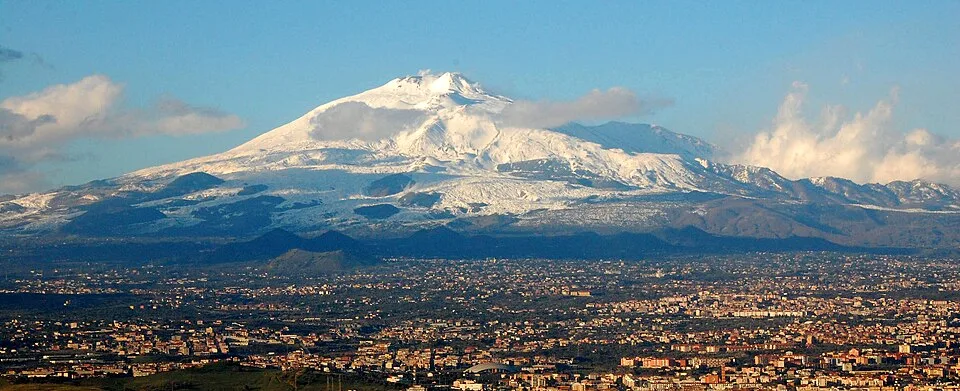
#1 Etna crater trekThe Corno Grande of Sicily — licensed guide to 3,357m, see the complete Etna summit guide on this site
#2 Zingaro coastal path7km northwest Sicily reserve — the best coastal walk in Sicily, clear coves, Posidonia, eagles
#3 Monte CofanoThe limestone promontory above Trapani — 4h circuit, the specific tuna fishing history, the Egadi islands view
#4 Madonie mountainsCentral Sicily high Apennine — Piano Battaglia (1,600m plateau), the Sicilian fir (the world's rarest tree), the Petralia villages
#5 Gole dell'AlcantaraThe lava canyon below Etna — 1-3h walk-in; the complete canyoning guide on this site
Sicily hiking realityMost Sicily hiking trails are poorly marked — download the Komoot GPS tracks before leaving the hotel
What is the complete Sicily hiking guide — the specific routes, the trail marking reality, and what makes each hike worth the effort?
Etna summit trek — the reference Sicily hike: The Etna summit trek is covered in the dedicated Etna summit guide on ItalyPlanner.ai — the complete guide to the cable car, the 4x4 jeep option, the licensed guide requirement for the summit craters at 3,357m, and the specific conditions and costs. The short version: the Funivia dell'Etna cable car from Piano del Fuoco (1,900m) to 2,500m (€15 return); the guided trek to the authorized observation area at 2,900m (€30 combined with cable car); the licensed summit trek to 3,357m (€55-75 with agency). Monte Cofano — the overlooked northwest Sicily hike: Monte Cofano (the limestone promontory above Custonaci, 30km north of Trapani — accessible by car from Trapani in 40 minutes via the SS187; the Monte Cofano Nature Reserve): (1) The circuit: the 4h circuit of the Monte Cofano base (the path that follows the sea cliff edge around the entire promontory — 10km; the specific sections: the north face (the highest cliffs, 100-120m above the sea, the specific tufa rock formations and the sea stack at the Cala Monnastero); the east face (the specific view across the bay to the Egadi Islands (Favignana, Levanzo, Marettimo) and to the Sicilian northwest coast); the south face (the specific Torrazza farmhouse ruins — the masseria abbandonata with the tuna fishing equipment dating from the last "mattanza" (the traditional tuna trap-fishing practice of the western Sicily waters, discontinued at Cofano in the 1990s after the collapse of Atlantic bluefin tuna stocks)); (2) The specific Monte Cofano wildlife: the Bonelli's eagle (Aquila fasciata — nesting on the north cliff; regularly seen at dawn and dusk); the peregrine falcon (Falco peregrinus — the fastest bird in the world, nesting on the Cofano cliffs); (3) Difficulty: E (easy-moderate); the circuit is well-marked (the rare case of a well-marked Sicily nature reserve trail); no guide required. The Madonie mountains — central Sicily's secret high plateau: The Madonie Natural Park (the limestone mountains in central-northern Sicily between Palermo (60km) and Catania (120km); the Piano Battaglia (the 1,600m plateau — the highest walkable plateau in Sicily outside Etna)): (1) The Sicilian fir (the Abies nebrodensis — the rarest tree in the world; only 30 adult specimens survive on the Madonie, protected by the regional park; the specific discovery: the Sicilian fir was believed extinct from the last Ice Age until 1957 when the botanist Pietro Pasta found the surviving specimens on the Madonie north slope; the conservation programme since 1990 has maintained the 30 adults and produced 2,000+ nursery plants for reforestation); (2) The Piano Battaglia walk (the plateau circuit from the Piano Battaglia refuge — 8km, 3h; the specific March-April visit: the Piano Battaglia is at 1,600m and typically has snow from December to March; in April the snowmelt produces the specific wildflower bloom (the Crocus siculus — the Sicilian crocus, endemic, the purple mountain crocus that flowers through the snow surface)); (3) The Petralia villages (Petralia Soprana and Petralia Sottana — the twin medieval villages on the Madonie ridge; the highest inhabited villages in Sicily outside Etna; the Petralia Soprana at 1,147m has the specific winter scene (snow on the roofs, the Piazza del Popolo empty, the Norman church silhouetted against the Etna horizon) that no Sicily summer visitor ever sees). Sicily trail marking — the honest reality: Sicily has a trail marking problem: the CAI (Club Alpino Italiano) Sicilian regional network exists on paper but the physical trail signs (the red-and-white paint marks on rocks) are maintained inconsistently — many trails that appear on the CAI maps are unmarked on the ground, overgrown, or have changed route since the last map update. The specific advice: (1) Download the specific trail tracks from Komoot or Wikiloc before leaving your accommodation; the user-generated GPS tracks are more reliable than the CAI paper maps for Sicily hiking; (2) Ask at the local Pro Loco (the municipal tourism office) for the most recent trail condition information (many Sicily trail conditions have changed due to the 2017-2023 wildfire seasons that burned large sections of the Madonie, Nebrodi, and Peloritani forests); (3) For the Zingaro reserve, the Parco Naturale della Zingaro ranger station (at both entrances) provides the current trail status and can advise on the best swimming coves for the day's sea conditions.
📜 L'Abies nebrodensis e la conservazione della biodiversità siciliana — come l'albero più raro del mondo si è salvato per la specificità di un botanico dilettante
L'Abies nebrodensis (l'abete dei Nebrodi, o abete siciliano — la specie di abete endemica della Sicilia, considerata estinta dal 1900 e "riscoperta" nel 1957) è uno degli esempi più documentati di conservazione botanica in Italia. Pietro Pasta (il botanico autodidatta di Isnello, un paese delle Madonie, che nel 1957 trovò sul versante nord della Montagna del Resinoso — a 1.650m di altitudine nelle Madonie — un piccolo bosco di 30 abeti di una specie che i manuali consideravano estinta dai tempi della glaciazione pleistocenica) identificò gli esemplari come Abies nebrodensis attraverso il confronto con i campioni d'erbario del botanico ottocentesco Antonio Borzì. La specificità della sopravvivenza: i 30 alberi adulti di Abies nebrodensis che Pasta trovò nel 1957 erano sopravvissuti alla deforestazione della Sicilia medievale e moderna (la Sicilia aveva perso il 95% della sua copertura forestale tra il 1000 a.C. e il 1900 d.C.) per una combinazione di inaccessibilità del terreno (il sito è su un versante ripido a 1.650m, fuori dai percorsi di pascolo e di legnatico), microclima favorevole (l'esposizione nord mantiene la neve più a lungo, proteggendo i semenzali), e pura fortuna. Il programma di conservazione (avviato dal Parco Naturale Regionale delle Madonie nel 1990): i 30 adulti sono stati rilevati GPS, recinati contro il pascolo, e propagati in vivai; 2.000+ giovani piante di Abies nebrodensis sono state rimesse a dimora nelle Madonie con un tasso di sopravvivenza del 70%. L'IUCN classifica l'Abies nebrodensis come "Critically Endangered" — la categoria più a rischio prima dell'estinzione.
More Sicily outdoor and hiking guides
What specific insider knowledge transforms visits to these Italian destinations — the details that every other guide consistently omits?
Ten insider insights for this batch of Italy destinations: (1) Sardinia driving and GPS reliability: The Google Maps routing on Sardinian secondary roads (the SP and SF roads) is notoriously unreliable — it sends drivers down unpaved tracks that appear as roads on the satellite image. The specific rule: before any Sardinia drive, download the offline Sardinia maps on maps.me (the free app with the most accurate Sardinian road database) as backup. Never rely solely on Google Maps south of Olbia or east of Cagliari on secondary roads. (2) Alcantara canyon and the crowd timing: The Gole dell'Alcantara have two completely different experiences by time: arrive at 8am (the opening of the Parco Botanico) and you will have the canyon to yourself for 45 minutes before the tour buses from Taormina arrive at 9-9:30am; arrive at 11am in July-August and the canyon floor has 300+ visitors. The 8am visit is the canyon as it actually is. (3) Puglia September food market intelligence: The Mercato del Contadino (the farmers market) in Ostuni takes place every Saturday morning on the Piazza della Libertà — in September, the stalls have the specific Fiaschetto di Torre Guaceto tomatoes (the heirloom variety from the biosphere reserve) at €2-3/kg; the same tomato in the supermarket costs €4-6/kg and is not the same variety. (4) Sicily trail GPS downloads: Before any Sicily hiking day, download the specific trail from Wikiloc (wikiloc.com — the GPS trail sharing platform; the specific Sicily hiking tracks are the user-uploaded ones with 50+ downloads and positive reviews; search "Monte Cofano" or "Madonie Piano Battaglia" and filter by "hiking" and "completed in the last 12 months"). The CAI Sicily paper maps are often 10-15 years old and do not reflect the post-wildfire trail changes. (5) The Val di Noto Baroque timing: The Val di Noto UNESCO circuit is best driven counterclockwise (Catania → Caltagirone → Ragusa Ibla → Modica → Scicli → Noto → Siracusa) because: the morning sun illuminates the east-facing facades of Ragusa Ibla and Modica (the most photographable); the afternoon sun illuminates the west-facing facade of the Noto Cathedral. The specific photo: the Noto Cathedral in the 4-6pm golden hour light from Via Corrado Nicolaci is the best single Baroque building photograph in Sicily. (6) Brunello and the Rosso di Montalcino strategy: The best-value Montalcino wine experience: buy the Rosso di Montalcino from the same producer whose Brunello you admire — the Rosso uses the same Sangiovese Grosso grapes from the same vineyards but released earlier and cheaper; the Casanova di Neri Rosso (€18 at the cantina) gives the specific Casanova di Neri terroir at a third of the Brunello price. (7) Valle d'Aosta ski and the off-piste powder window: The specific Courmayeur powder window: the Val Veny north-facing runs (accessible from the Plan Chécrouit mid-station) receive the best untracked powder in the 24-48 hours after a snowfall event; after 48 hours, the northwest-facing runs at Cervinia have been tracked. The specific Courmayeur forecast: the Météo France mountain forecast for the Mont Blanc massif (weather.com/fr/meteo/horaire/l/Courmayeur) is the most accurate for the Courmayeur north-face conditions. (8) Aeolian Islands and the August booking reality: In August, the Aeolian Islands ferries (Liberty Lines) sell out 3-5 days ahead on the main Milazzo-Lipari route; the return ferries on Sunday (the ferry back from Lipari to Milazzo after the weekend) sell out fastest. Book round-trip ferry tickets the moment you know your dates at libertylines.it. (9) Kitesurfing in Italy and the wind forecast apps: The specific wind forecasting tools for Italian kitesurfing: iKitesurf (ikitesurf.com) is the most used by the Italian kite community and provides the spot-specific forecast for Porto Pollo, Stagnone, and Brindisi with 10-day horizon; the Windguru spot for "Porto Pollo Sardinia" is the specific URL that the local school instructors use for daily decision-making. (10) Boat tours and the September sea state: September in the Aeolian Islands: the sea state is calmer than July-August (the Tramontane storms of late August have typically passed; the autumn Mediterranean anticyclone produces flat calm from mid-September to mid-October); the September sea conditions are the best of the year for the sea cave visits at Filicudi (the Grotta del Bue Marino is only accessible in calm sea — wave height below 0.3m — which is reliably the case in September).
⚠️ Booking essentials for this batch: Brunello cantinas (Biondi-Santi, Soldera, Poggio di Sotto): appointment required 2+ weeks ahead by email. Aeolian Islands ferries in August: book at libertylines.it the moment you know your dates — they sell out. Stromboli night tour from Lipari: book minimum 3 days ahead in July-August. Cervinia-Zermatt combined ski pass: buy at the Cervinia lift station (not online) to ensure the Zermatt side is accessible on your day. Sicily hiking GPS: download Wikiloc tracks before leaving the hotel — there is no mobile signal in the Madonie interior.
More Italy travel intelligence that makes the real difference at these specific destinations
Five additional specific insights: (1) Sardinia coastal driving and the "strada bianca": Many of the most beautiful Sardinian coves (the Cala Goloritze, the Cala Mariolu, the Cala Biriola on the Gulf of Orosei) are accessed by "strade bianche" (unpaved white gravel roads) that are technically drivable in a standard hire car but damage the car's undercarriage on the worst sections; the specific advice is to rent a small SUV (a Jeep Renegade or similar) rather than a standard city car for any Sardinian east coast drive. (2) Canyoning guide selection in Italy: When selecting a canyoning guide in Italy, verify the ANAC (Associazione Nazionale Accompagnatori di Canyoning) certification specifically — not just the generalist outdoor guide license; the ANAC certification requires specific canyoning rescue training, equipment standards, and route evaluation protocols that the generic "guida escursionistica" does not cover. The ANAC website (canyoning-anac.it) lists all certified guides by region. (3) Puglia in late October — the olive harvest: The olive harvest in Puglia begins in late October (the specific Coratina and Ogliarola cultivars of the Terra di Bari area are harvested October 20 — November 10; the Carolea of the Brindisi area is earlier, October 10-25); the harvesting (mechanical vibration harvesters on the large trees, hand-raking on the traditional small trees) is visible from the secondary roads of the Fascia Olivetata (the specific olive grove belt between Bari and Brindisi — the largest contiguous olive grove in the world, 50 million trees over 300,000 hectares). Several agriturismi in the Fascia Olivetata area organize the "frangitura" experience (the olive oil pressing day — watching the fresh oil emerge from the cold press; the freshly pressed oil (the "olio novo") has the specific green-peppery character that bottled oil never reproduces; 1-day harvest participation programs from €40/person including lunch). (4) Brunello and the 2020 vintage: The 2020 vintage of Brunello di Montalcino (released in January 2026 for the standard Brunello; the Riserva will be released in 2027) was produced in a warm-dry year: the wines are rounder and more immediately approachable than the structured 2016; less ageing potential than the 2015 and 2016 vintages but the best value for drinking now (2026-2030). The 2020 Rosso di Montalcino (already released) gives the earliest preview. (5) Aeolian Islands and the volcano hazard context: The Stromboli volcano had significant paroxysmal eruptions in 2019 (July 3, 2019 — a paroxysmal explosion killed one hiker and sent lava flows to the sea; the eruption column reached 3,000m) and in 2022 (October 9, 2022 — a smaller paroxysm). The specific visitor guidance: the official Stromboli trekking route to the crater (to 400m altitude — NOT the 924m summit) is open with a licensed guide only; the sea observation of the Sciara del Fuoco (from 300m+ distance by boat) has no documented hazard to visitors in normal eruption conditions. Always check the current INGV (Istituto Nazionale di Geofisica e Vulcanologia — ingv.it) alert level before any Stromboli visit.
Plan your Italian trip — free
Our AI builds a day-by-day itinerary with real transport, real opening times, real prices.
Build my itinerary