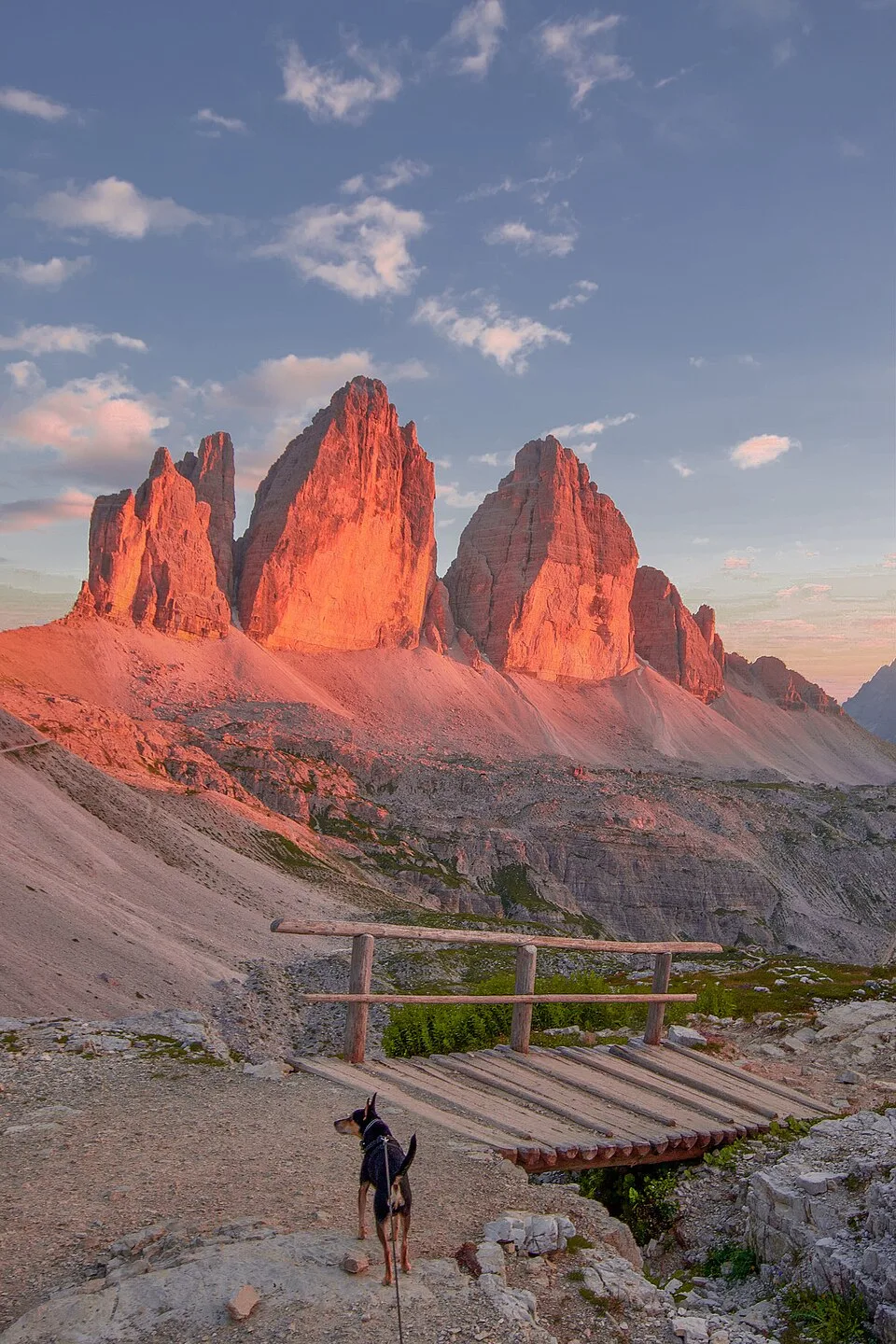
Best scenic drives in the Dolomites — mountain passes and the Grande Strada route
The Dolomites contain the most spectacular mountain road network in Europe — more dramatic than Switzerland's Gotthard passes, more varied than the French Pyrénées, and specifically Italian in their combination of extraordinary natural scenery with the rifugio culture, the cycling heritage, and the Ladin-German-Italian cultural layering that gives every valley its own distinct character. Here is the complete driver's guide.
🎟️ Tours & tickets
🎟️
Scenic Drives Dolomites: tours & tickets
Compare guided tours, skip-the-line tickets and day trips for Scenic Drives Dolomites.
See availability & prices →We may earn a commission, at no extra cost to you.
Grande Strada110km circuit — the classic Dolomites driving route
Passo Stelvio2,757m — Italy's highest paved road, 48 hairpin bends
Passo Giau2,236m — the most photographed Dolomite pass
Passo Falzarego2,105m — WWI battlefield, cable car to Lagazuoi
Sella Pass2,244m — the Sella Ronda circuit center
June-OctoberHigh pass season — check closures before driving
What is the Grande Strada delle Dolomiti and how do you drive it?
The Grande Strada delle Dolomiti (the Great Dolomite Road, approximately 110km from Bolzano/Bozen to Cortina d'Ampezzo) is the classic Dolomites driving circuit, designed in 1909 by the Austrian empire to connect the two main towns through the mountain chain at its most spectacular. The route: Bolzano → Ponte Nova → Passo Costalunga (1,753m) → Vigo di Fassa → Canazei → Passo Pordoi (2,239m, the highest pass on the route) → Arabba → Passo Falzarego (2,105m) → Cortina d'Ampezzo. Total distance: approximately 110km, approximately 3 hours driving without stops, but meaningfully done in a full day with stops at each pass for the view, a rifugio lunch, and the WWI battlefield at Falzarego. The specific visual moment: the descent from Passo Pordoi toward Arabba, looking back at the Sella massif (the flat-topped, vertical-sided mountain that dominates the central Dolomites), gives the most architecturally extraordinary mountain view on the route — the Sella's vertical walls rising 1,000 metres above the meadows is the definitive Dolomite image. June-October is the driving season; the passes close in winter (snow, typically November-May depending on year).
📜 The Passo Falzarego WWI battlefield — the mountain tunnels and the war that defined the Dolomites
The Passo Falzarego (2,105m) was the scene of some of WWI's most extraordinary mountain warfare — the Italian and Austro-Hungarian armies occupied opposing peaks of the Lagazuoi and Tofane massifs that flank the pass, with front lines 200 metres apart for three years (1915-1918). Unable to advance across the exposed terrain, both sides tunneled into the mountains — the Italians carved 1,300 metres of tunnel into the Piccolo Lagazuoi cliff face, the Austrians carved equivalent tunnels into the Tofana di Rozes, and both sides repeatedly detonated massive charges to blow the opposing tunnel systems off the cliff. The resulting craters, tunnel entrances, and defensive positions are still visible and accessible today: the Lagazuoi cable car (from Passo Falzarego base, €15 return) ascends to 2,778m where the tunnel system is accessible as a self-guided historical walk (approximately 2 hours, exit back at Passo Falzarego on foot — a descent through the original wartime tunnels, roughly 1.5 hours, trail shoes required). The Museo della Grande Guerra in Cortina documents the mountain war campaign. The WWI positions visible from the Grande Strada at Falzarego are not historical reconstructions — they are the actual positions, preserved by the mountain cold and relative inaccessibility for 100 years.
More Dolomites and northern Italy driving guides
What are Italy's most extraordinary natural landscapes beyond the famous ones?
Ten Italian natural landscapes that rival the famous ones but receive a fraction of the visitors: (1) Valle d'Aosta (the alpine valley region bordering France and Switzerland — Monte Bianco, Gran Paradiso national park, the mediaeval fortresses of Bard and Fenis visible from the autostrada); (2) The Maremma (southern Tuscany — the coastal wetlands with wild horses, Etruscan tombs in the hills, and the Argentario peninsula promontory jutting into the Tyrrhenian); (3) Lago di Garda northern shore (above Riva del Garda, the landscape transitions from Mediterranean to alpine in 10km — the Ora and Peler winds creating conditions specific to this thermal microclimate); (4) Basilicata's Pollino mountains (the Pollino National Park, the largest in Italy, with ancient Bosnian pine forests, the Raganello gorge, and a cultural isolation that preserved traditions unavailable elsewhere); (5) Friuli-Venezia Giulia karst (the limestone karst plateau between Trieste and the Slovenian border — the Grotta Gigante, the Lipica white horses stud, and the specific cold-wind microclimate); (6) The Sila plateau (Calabrian plateau forests, a genuinely wild interior that most Italy visitors never reach); (7) The Gargano promontory (the spur of the Italian boot, with dramatic white limestone cliffs above the Adriatic, the Foresta Umbra beech forest, the Tremiti islands); (8) Pantelleria island (volcanic island 70km off the Tunisian coast, the source of the Zibibbo grape and passito di Pantelleria, the black lava stone landscape unlike anything in continental Italy); (9) Val di Mocheni and Fersina valley (Trentino — the German-speaking Mocheni community, preserved traditional architecture, almost no international visitors); (10) Aspromonte (the Calabrian mountains at Italy's southernmost point — the highest point is 1,955m, the descent to the sea is the steepest in Italy).
What are Italy's most important historical turning points that shaped what visitors see today?
Eight historical moments that explain why Italy looks and functions as it does: (1) The fall of Rome (476 AD) — the dissolution of the Western Empire didn't end Roman civilization; it fragmented it into competing city-states that spent the next 1,000 years fighting, trading, and patronizing art in ways that produced the Renaissance. Without the fragmentation, the competitive patronage would not have existed. (2) The Norman conquest of Southern Italy (1060-1130) — the Normans unified Sicily, Calabria, and Campania under a single kingdom for the first time, creating the Arab-Norman-Byzantine cultural synthesis visible in Palermo's Palatine Chapel and the Amalfi Cathedral's bronze doors. (3) The Black Death in Italy (1348) — Florence lost approximately 40% of its population in one year. The resulting labor shortage increased wages and social mobility, directly contributing to the social conditions that produced Florentine capitalism and the early Renaissance patronage system. (4) The Sack of Rome (1527) — the destruction of Rome by mutinied Holy Roman Empire troops effectively ended the High Renaissance, dispersed Roman artists across Italy, and shifted cultural power toward Venice. (5) The Council of Trent (1545-1563) — the Catholic Church's response to the Reformation produced the Counter-Reformation's visual program: magnificent art in churches, specifically designed to move the emotions of believers. This is why Rome has so many extraordinary church paintings and sculptures. (6) Italian Unification (1861) — the creation of the Italian state from dozens of independent kingdoms, duchies, and papal territories produced a political unity but preserved the regional food, dialect, and cultural identity that makes Italy so varied. (7) The "Economic Miracle" (1950-1970) — Italy's post-WWII economic recovery was the fastest in European history, producing the wealth that funded the preservation of the historic centers and the artisan tradition that visitors experience today. (8) The preservation laws of the 1960s-70s — Italy's specific legislation protecting historic centers from demolition and development kept the historic cores of Rome, Florence, Venice, and other cities from the urban renewal that destroyed equivalent areas in other European countries.
What are the most important things to understand about Italian hospitality culture?
Seven aspects of Italian hospitality that shape every traveler's experience: (1) The bar as social institution: the Italian bar (café) is not primarily a drinking establishment — it is the neighborhood social center, open from 6am to 11pm, serving espresso to workers before their shift, quick cornetto to students on the way to school, aperitivo to residents after work, and late drinks to the social evening crowd. The price difference between standing at the counter (the local rate) and sitting at a table (the tourist surcharge) is the physical expression of this social hierarchy. (2) The restaurant timing: lunch (pranzo) 12:30-2:30pm; dinner (cena) 8-10:30pm. Arriving for dinner at 6pm produces puzzled looks and an empty restaurant. Arriving at 8pm is correct in Rome and Naples; 8:30-9pm is normal in Milan and Florence. (3) The table reservation system: serious Italian restaurants expect reservations for dinner; the most sought-after places book up 2-3 weeks ahead. Restaurants without reservations serve first-come-first-served; arriving 5 minutes before opening usually gets a table without a reservation. (4) Service charges: Italian restaurants do not have a tipping culture equivalent to the American model. The coperto (cover charge, €1.50-4) covers bread and table setup; tipping 5-10% on the bill for genuinely good service is appreciated but not expected. (5) Sunday behavior: Sunday in Italy has its own specific social texture — large family lunches, the afternoon passeggiata, closed shops in many cities. The Sunday experience of Italian cities is genuinely different from the weekday experience. (6) The local bar hierarchy: at any good Italian bar, the first espresso of the morning establishes your status — the regular who stands at the counter, orders by a look, and is handed their coffee by a barista who already knows their order is the highest-status customer. The tourist who asks for a "large coffee" gets served, but differently. (7) House wine quality: the vino della casa (house wine) in Italian trattorias and osterie is often the best-value wine on the menu — sourced directly from a local producer, served in a half-litre carafe, and representing the specific local variety of the region. Ordering house wine over a bottled wine list produces better value and frequently better wine in family-run restaurants.
💡 Italy's most underestimated quality: The specific Italian attitude toward beauty in daily life — the care taken with how food is presented on a plate even in a simple trattoria, the attention to packaging in a bakery, the arrangement of produce at a market stall, the flower boxes on residential windows — reflects a cultural principle that aesthetics are not a luxury but a basic requirement. This is not decoration. It is a coherent worldview in which the quality of the everyday visual environment is considered essential to human flourishing. Travelers who engage with this seriously — who pay attention to how a bartender makes their espresso, how a market vendor selects the specific artichoke — leave Italy having learned something about the relationship between craft and daily life that is genuinely hard to find elsewhere.
What are Italy's most underrated regional cuisines beyond Rome, Florence, and Naples?
Five regional Italian food traditions that visitors almost never encounter: (1) Ligurian cuisine (beyond pesto): the Ligurian food tradition goes deep — pansoti (filled pasta in walnut sauce), stoccafisso accomodato (the specific Ligurian stockfish in tomato with olives and pine nuts), focaccia di Recco (the thinnest flatbread in Italy, filled with fresh crescenza cheese, a Recco specific that cannot be properly reproduced elsewhere), trofie pasta format (the short twisted pasta that holds pesto differently from spaghetti). (2) Friulian cuisine: frico (a cheese and potato cake fried in its own fat, the most satisfying and least exported Italian cheese dish), montasio (the specific Friulian mountain cheese), jota (bean and sauerkraut soup, the Habsburg legacy in Italian cooking), and the extraordinarily complex sweet-and-sour pork tradition of the Austro-Hungarian border. (3) Pugliese cuisine: the most vegetable-forward Italian regional tradition — orecchiette with cime di rapa (ear-shaped pasta with bitter turnip greens), bombette (small rolls of meat stuffed with cheese and grilled over coals), fave e cicoria (dried fava bean purée with wild chicory), burrata di Andria (the cheese that Italians themselves travel to Puglia to eat). (4) Sardinian cuisine: porceddu (whole-roast piglet on myrtle wood), culurgiones (the elaborate sealed ravioli specific to the Ogliastra province, each folded to prevent the filling from escaping during cooking by a technique requiring significant practice), sebadas (fried pastry filled with cheese served with bitter honey), and the specific tradition of eating bottarga (cured mullet roe) over pasta in a way that tastes completely different from the bottarga used everywhere else in Italy. (5) Venetian cuisine: beyond the cicchetti — risi e bisi (rice and peas, the dish served to the Doge on St. Mark's Day, April 25, made with the first young peas of spring), bigoli in salsa (thick whole-wheat pasta with anchovy and onion sauce, a recipe unchanged since the 17th century), fegato alla veneziana (calf's liver with onions, the most forgiving offal preparation in Italy), and the specific boiled seafood tradition (granseola, moeche, schie) that reflects the Adriatic lagoon directly in the cooking.
Plan your Italian trip — free
Our AI builds a day-by-day itinerary with real transport, real opening times, real prices.
Build my itinerary →