Capri: The Complete Guide for People Who've Seen the Instagram (2026)
Autore: La Redazione di www.tourleaderpro.com
Last updated: April 2026. One of Italy's most beautiful islands, and one of its most complicated to visit well.
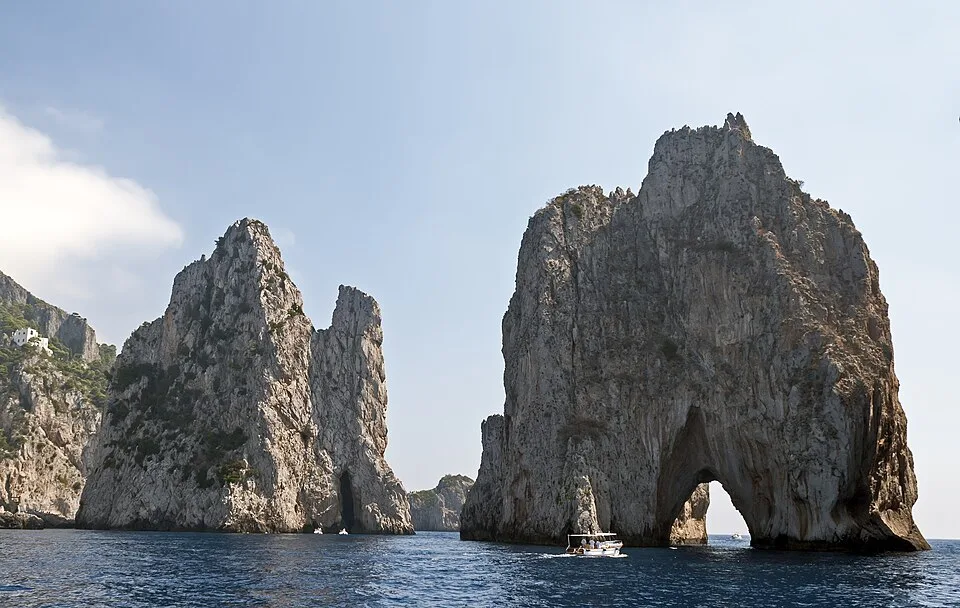
Capri is a limestone island of 10.4 square kilometers in the Bay of Naples, with a permanent population of approximately 14,000, and receives more than 7 million visitor days per year. The math — 7 million visits on 10 square kilometers — creates in summer an experience that requires careful management by the visitor to be enjoyable rather than a test of patience. The island is genuinely beautiful: the limestone cliffs, the faraglioni rocks rising from the sea, the bougainvillea-draped streets of the two towns, and the views across the bay to Vesuvius are not exaggerated by reputation. Getting to the version of Capri worth experiencing requires specific timing and approach.
Capri Complete Guide
Capri is a limestone island of 10.4 square kilometers in the Bay of Naples, with a permanent population of approximately 14,000, and receives more than 7 million visitor days per year. The...
Getting There
Capri is reached by ferry and hydrofoil from Naples (Molo Beverello and Calata Porta di Massa piers), Sorrento, Positano, and Amalfi. The most practical connections:
Capri: tours & tickets
Compare guided tours, skip-the-line tickets and day trips for Capri.
See availability & prices →Compare tours on Viator →We may earn a commission, at no extra cost to you.- Naples → Capri hydrofoil: 50 minutes, €22–24 one-way, operated by SNAV, Caremar, and NLG. Multiple departures daily from Molo Beverello. The hydrofoil does not run in rough sea conditions — this is weather-dependent.
- Naples → Capri ferry (slow): 80 minutes, €12–14 one-way, operates in rougher conditions than hydrofoil. Useful for transporting luggage.
- Sorrento → Capri hydrofoil: 25 minutes, €18–22 one-way. The most practical connection if you're based on the Sorrentine Peninsula or Amalfi Coast.
All boats arrive at Marina Grande — the main port, at sea level. The two towns (Capri Town and Anacapri) are above: Capri Town at 142 meters, reached by funicular (€2.20, runs until midnight in peak season) or taxi (€15); Anacapri at 275 meters, reached by bus from Marina Grande (€2) or taxi (€20–25). There are no private cars on Capri — the island has small electric taxis, golf carts, and public buses (run by ATC Capri, single journey €2) as the only motorized transport.
The Blue Grotto: Reality Check
The Grotta Azzurra (Blue Grotto) is the primary attraction for most day visitors and is both genuinely extraordinary and genuinely difficult to experience satisfactorily on a typical day visit. The cave is a sea cave 54 meters long, 30 meters wide, and 2.4 meters high at the entrance (the entrance opening is 1.3 meters high, requiring visitors to lie flat in the rowboat to enter). The extraordinary blue light effect — the water glows a luminescent electric blue — is caused by sunlight entering through a submerged opening below the entrance and refracting upward through the water.
The logistics problem: entry to the grotto requires transferring from a motorized boat (which cannot enter) to a small rowboat rowed by a local boatman. Each rowboat carries 4 passengers maximum. The grotto is accessible only in calm sea conditions (closed when there is any significant swell). Each boat passes through in approximately 5–7 minutes. The waiting time in peak season (July–August) can reach 2–3 hours on the water in the motorized boat queue, then 30–45 minutes on the rowboat queue at the grotto entrance. Entry fee: €18 (rowboat) + €18 (boat from Marina Grande) = €36 per person, for 5–7 minutes in the cave.
The blue light is real. The 5–7 minutes may or may not justify 3 hours of waiting in the sun on a small boat. Early morning visits (the first boats leave Marina Grande at 9:00, arrive at the grotto 9:15) have the shortest queues; the cave is open from 9:00–17:00 when conditions permit. The motorized boat tour from Marina Grande (various operators, approximately €18 for the circle of the island with a grotto stop) is the standard approach — book the first departure.
Alternative: the grotto is accessible by swimming from the external rocks (there is a ladder descent to the water level) or by kayak (when no swell). This is free and allows substantially more time inside — but requires sea confidence, no baggage, and the physical ability to dive or swim through the entrance. The guards at the entrance occasionally (not consistently) prevent this in peak season when the commercial boat queue is long.
Day Trip vs Overnight: The Honest Calculation
This is the central decision and most travel content hedges it. Here is the honest answer:
Day trip from Naples or Sorrento is worth it if: you arrive on the first or second ferry (9:00–10:00), walk up to Capri Town immediately (beating the 11:00–14:00 crowd wave from the later ferries), walk the trails in the island's interior or to Villa Jovis (Tiberius's villa, 45 minutes from Capri Town) in the morning, eat lunch at a trattoria in Anacapri (cheaper, quieter), and leave on the 16:00–17:00 ferry before the returning day-tripper rush. This produces a 7–8 hour day that is genuinely excellent.
Day trip is not worth it if: you arrive after 11:00, queue for the Blue Grotto for 2 hours, spend time in the Piazzetta (Capri Town's central square, impossible to sit in at peak, genuinely not that interesting), eat at a tourist-facing restaurant, and leave on the last ferry. This produces an expensive, crowded, underwhelming day.
Overnight stay is worth it if: you want to walk the island at dawn and sunset when the day-tripper boats are not running (the atmosphere is completely different — the island belongs to its residents); you want to swim at the offshore rocks below the faraglioni in the morning before the boat traffic; you want to eat dinner at a genuinely good restaurant in Capri Town in the evening. Cost: meaningful — overnight on Capri is expensive (see below).
Capri Town and Anacapri
Capri Town: the Piazzetta (officially Piazza Umberto I) is the most expensive piece of outdoor seating real estate in Italy — the cafe chairs cost €6–10 for an espresso and the square is roughly 30 meters across. It is photographed constantly, full from 10:00–18:00 in summer, and actually beautiful in early morning when the bougainvillea is lit by low sun and the square has 10 rather than 200 people in it. The surrounding streets (Via Camerelle for high fashion, Via Le Botteghe for local shopping) are the appropriate scale for Capri Town's character — narrow, shaded, built on the medieval street grid.
The Villa Lysis (Via Lo Capo, open daily 10:00–17:00, €5) is the 1905 neoclassical villa built by French poet Jacques d'Adelswärd-Fersen — a fascinating architectural object in its own right and a window into Capri's Belle Époque period as a refuge for artists and aristocrats fleeing social and legal constraints in their home countries (Fersen had been convicted in France for corruption of minors involving aristocratic schoolboys). The villa's garden terrace has one of the best coastal views on the island.
Anacapri: the higher, quieter town is where Capri's daily life operates at a pitch removed from the tourism below. The church of San Michele (18th century, with a remarkable majolica floor depicting the Garden of Eden in 2,500 hand-painted tiles — €3, open daily) is the specific aesthetic object that makes a visit to Anacapri worth the bus ride. The chairlift to Monte Solaro (608 meters, the island's highest point, €10 return, 12 minutes each way) gives the best panoramic view of the Bay of Naples — the volcanic islands (Ischia, Procida), the Sorrento peninsula, and on clear days, the Amalfi Coast and the shadow of Vesuvius.
Walking Capri's Interior
The majority of Capri's visitors never leave the Piazzetta or the Marina Grande waterfront. The interior walking trails are comparatively empty and comparatively beautiful. Key routes:
Villa Jovis (45 minutes on foot from Capri Town via Via Tiberio): the ruins of Tiberius's principal imperial residence (27–37 AD), on the eastern promontory of the island at 334 meters elevation. Tiberius governed the Roman Empire from this villa for the last 10 years of his reign, never returning to Rome. The ruins show the cistern system (the island has no rivers — all fresh water was collected), the imperial apartments, and the "Tiberius's Leap" cliff edge (Salto di Tiberio) — the vertical cliff from which the emperor allegedly had people thrown. The archaeological evidence for the throwing is zero; the historical source is Suetonius, who was writing under Hadrian 80 years later and has a clear rhetorical interest in vilifying previous emperors. The cliff is real and the view is extraordinary. Entry €6, open 9:00–18:00.
Arco Naturale loop (2.5 hours from Capri Town): the natural limestone arch on the eastern coast, visible from a clifftop terrace. The path continues down to the Grotta di Matermania (an ancient nymphaeum, Roman or pre-Roman, with a cave ceiling once decorated with mosaic and stucco) and back up the Passegiatta del Pizzolungo cliff path — one of the most spectacular coastal walks in the Tyrrhenian.
History: 2,000 Years Compressed
The island was occupied in the Neolithic and Bronze Ages — finds from the Grotta di Matermania predate Greek colonization. The Greeks briefly controlled it; the Romans under Augustus took possession in exchange for the larger island of Ischia (31 BC), finding Capri's compact, defensible topography more appropriate for an imperial retreat.
Augustus spent his last years on Capri (the Villa Jovis predates Tiberius — what remains is the Tiberian reconstruction). Tiberius (emperor 14–37 AD) made it his permanent imperial residence from 27 AD onward. The island thus governed the Roman Empire from a limestone cliff for 10 years — state dispatches arrived by relay from Rome, senators and petitioners made the sea crossing for audiences, and the center of power was this promontory 330 meters above the Bay of Naples. Tiberius died on Capri in March 37 AD; his successor Caligula promptly returned to Rome.
The Byzantine, Norman, Aragonese, and Spanish periods left less dramatic physical traces. The 19th century produced Capri's second wave of historical significance: the island became a refuge for northern European artists, writers, and aristocrats — particularly those whose sexuality or politics made them unwelcome at home. Oscar Wilde visited; Norman Douglas wrote South Wind here; Maxim Gorky ran a Communist party school on the island 1909–1913; Lenin visited. The synthesis of extraordinary natural beauty and social latitude that characterized fin-de-siècle Capri gave it a specific cultural meaning that the shopping-and-selfie tourism of today has largely replaced.
Eating and Drinking
Capri is expensive. This is structural — everything on the island (including the staff) arrives by boat. The cheapest meal option: buy provisions at one of Anacapri's small alimentari (grocery stores) and eat on a terrace or cliff-top path. A cheese-and-charcuterie picnic from an alimentari with a bottle of local wine costs €15–20 for two and can be eaten with a view that the most expensive restaurant on the island can't match.
Legitimate Capri food experiences worth the price: Da Paolino (Via Palazzo a Mare 11, set under lemon trees, exclusively outdoor, Capriote cuisine — linguine alla nerano, ravioli capresi with lemon and marjoram, fresh fish, €50–80/person) is the island's most authentic upscale restaurant and worth the price for the setting alone. Lo Sfizio in Anacapri (Via Orlandi 272, €20–35/person, honest local cooking, no tourist markup) is the best value full-service restaurant on the island. Bar Tiberio (Piazzetta, €6 espresso, accept it and move on) — the Piazzetta cafe price is the price; complaining is futile.
Limoncello: Capri's lemon production (sfusato di Capri) is distinct from the Amalfi variety. Buy directly from producers rather than from tourist shops. Gran Caffe, on Via Roma, stocks locally produced limoncello at reasonable prices.
Real Costs in 2026
| Item | Price Range |
|---|---|
| Return ferry from Naples (hydrofoil) | €44–48 |
| Return ferry from Sorrento | €36–44 |
| Funicular Marina Grande → Capri Town | €2.20 each way |
| Bus (any route) | €2.00 |
| Taxi (Marina Grande → Anacapri) | €20–25 |
| Blue Grotto (total: rowboat + motorboat) | €36 per person |
| Villa Jovis entry | €6 |
| Monte Solaro chairlift (return) | €10 |
| Espresso in Piazzetta cafe | €6–10 |
| Espresso in Anacapri side street bar | €1.50–2 |
| Lunch trattoria in Anacapri (mains) | €14–22 |
| Dinner in Capri Town (mains) | €25–45 |
| Hotel in Capri Town, peak season | €180–500/night |
Q&A: What Visitors Always Ask
Is Capri worth it for a day trip from Rome?
Barely, logistically. Rome to Naples by Frecciargento: 1h 10min. Naples to Capri by hydrofoil: 50 minutes. You arrive on Capri at roughly 11:30. You need to leave by 16:30 to make the last comfortable connection back to Rome. That's 5 hours on the island. It's possible — do the Arco Naturale walk, skip the Grotto, eat lunch in Anacapri. A better approach is making Capri the anchor of a 2-night Naples-base trip.
Can I camp or sleep on the beach in Capri?
No. There are no campgrounds on the island and sleeping on beaches or in public spaces is prohibited. The island's small size and residential density makes enforcement effective. This is one reason the overnight visitor experience on Capri is disproportionately expensive — there are no budget accommodation options.
Is Capri accessible for people with mobility limitations?
Partially. Marina Grande and the central Capri Town are accessible (the funicular is the main connection, lift accessible). Most of the interior trails are not accessible — they involve stone staircases and uneven terrain. Anacapri is reached by bus with steep gradients. The Blue Grotto rowboats require considerable flexibility to board. Contact individual hotels and the tourist office (Via Roma 19, Capri Town) for specific accessibility information.
When is Capri least crowded?
November through March: the day-trip ferry services from Naples operate at reduced frequency or for residents only on some winter days, meaning the island has almost no tourists. Hotels are mostly closed (some B&Bs and apartments remain open). The permanent population of 14,000 lives its normal life — the cafes in the Piazzetta return to their function as neighborhood meeting points, the shops sell groceries rather than souvenirs, and the hiking trails are empty in extraordinary winter light. The downside: most restaurants and attractions operate reduced hours; some close entirely. The upside: the island as it actually is, without the performance.
What are the best boat tours around the island?
The circumnavigation of Capri by boat (giro dell'isola, approximately 2 hours) reveals the cliff faces, caves, and rock formations that are invisible from the island's interior. The Faraglioni rocks (three stacks rising 81 meters from the sea, the central one pierced by an arch large enough to pass under by boat) are the defining image of Capri. The Grotta Verde (Green Grotto), Grotta Bianca (White Grotto), and the Grotta Azzurra are all on the circumnavigation route. Group boat tours operate from Marina Grande (€18–25/person, 2 hours). Private motorboat hire (€100–180 for a half-day, including fuel and a skipper for waters immediately around the island) allows swimming stops at specific formations.
Is it true Tiberius had people thrown from a cliff on Capri?
The source for this claim is the historian Suetonius, writing 80–90 years after Tiberius's death under the reign of Hadrian. Suetonius's Lives of the Twelve Caesars is entertaining, specific, and unreliable as a factual source — his purpose was rhetorical and moral rather than historical, and the vilification of emperors who had died safely out of living memory was a standard literary technique. The physical feature called "Tiberius's Leap" (Salto di Tiberio) at Villa Jovis is real — a 330-meter vertical cliff above the sea. Whether anyone was thrown from it is genuinely uncertain. The cliff itself is extraordinary regardless.
Can I swim below the Faraglioni rocks?
Yes. The small beach and rock platform at the base of the Faraglioni (accessible via the Via Arco Naturale path from Capri Town, 40 minutes on foot, with a final descent to the water — not suitable for those with mobility issues) offers swimming directly below the rock formations. The arch in the central Faraglione is wide enough to swim through; the passage is managed by tour boats in season but swimable from the rocks. The sea at this point is very deep (20–30 meters below the surface visible from above) and extraordinarily clear. This is the best swimming spot on the island for anyone who can reach it on foot.
What Nobody Tells You About Capri
The Best View Requires No Ticket
The gardens of Augustus (Giardini di Augusto, Via Matteotti, Capri Town, €1 entry) have the most spectacular cliff-edge view on the island — directly above the faraglioni rocks, looking toward Anacapri and the sea. They are quiet (the Piazzetta crowds don't know they exist), the bougainvillea is spectacular in May–June, and they are open until 18:00. This is the correct answer to "where should I go in Capri Town" for anyone who has had enough of the shopping streets.
The Island Has a Functional Agricultural Economy
Capri grows lemons, olives, and vegetables on its terraced hillsides — the same terraced agriculture visible in the Cinque Terre but rarely mentioned in the context of an island associated primarily with luxury tourism. Walking the interior paths in April–May you pass actively maintained lemon groves and vegetable gardens worked by islanders who have done this work for generations. The agricultural tradition is one of the reasons the island's landscape has the character it does — without the terracing, the limestone hillsides would be maquis scrub rather than cultivated beauty.
Related Reading on ItalyPlanner.ai
- Amalfi Coast vs Cinque Terre: Which Should You Choose?
- Naples: Pizza, History, and the City That Refuses to be Liked
- Italy History Timeline: From Tiberius to Today
- Is Italy Safe? The Honest Guide
Plan the rest of your Capri trip
The essentials, compared and booked with the official sellers. Same price for you; we may earn a commission.