Catania public transport guide — metro, buses and using Catania as a Sicily base
Catania is Sicily's second city and its most useful transport hub — the metro (Sicily's only underground railway line, connecting the airport to the historic center), the AMT bus network, and the railway connections to Taormina, Syracuse, and Palermo make it the natural base for a Sicily circuit. The historic center itself (the Baroque piazza with the Liotru elephant fountain, the fish market) is compact and walkable. Here is the complete guide.
Metro Line 1Airport to Via Etnea (center) in 15 min — €1.00
AMT busesCity network + Etna approaches — €1.00 single
Train to Taormina45 min, €4.50 — then cable car up to town
Train to Syracuse1h20, €7.50 — the finest Greek archaeological site in Sicily
Fish marketPescheria — Mon-Sat morning, a 10-min walk from station
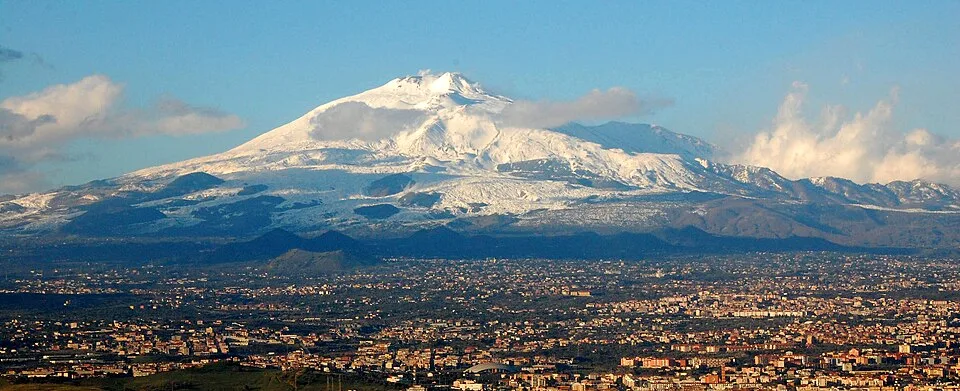
Etna accessBus to Rifugio Sapienza (1,900m) then cable car — €50 round trip
What is the complete Catania public transport guide and how do you use Catania as a Sicily base?
Catania metro and airport connection: The Metropolitana di Catania (Line 1 — the only metro in Sicily) runs from Catania Fontanarossa Airport to the city center (Via Etnea, the main commercial street) in approximately 15 minutes (€1.00 single). The line has 9 stations and runs until midnight. From the Via Etnea stations (Stazione Centrale, Via Etnea) the fish market (Pescheria) and Piazza del Duomo are 10-15 minutes walk. Catania as Sicily transport hub — the key connections: (1) Train to Taormina-Giardini (45 min, €4.50): Trenitalia from Catania Centrale to Taormina-Giardini station (the station is at sea level; a cable car (funivia, €3.50 single) climbs from the station to the town at 200m). The fastest Taormina access from Catania. (2) Train to Syracuse/Siracusa (1h20, €7.50): the finest Greek archaeological site in Italy — the Neapolis Archaeological Park (Greek theatre from the 5th century BC, the Latomie del Paradiso quarries, the Ear of Dionysius cave) and the Ortygia island historic center (the Piazza del Duomo, one of the finest baroque piazzas in Europe, built around the Temple of Athena incorporated into the Cathedral). (3) Bus to Etna — Rifugio Sapienza: the AST bus from Catania Centrale bus station (summer only, typically June-October) runs to Rifugio Sapienza (1,900m) on Etna's south slope — approximately 1h30, €3.50 single. From Sapienza, the cable car (Funivia dell'Etna, €30 return) ascends to 2,500m and guided jeep and walking tours continue to the active crater area at 3,000-3,350m. The Catania fish market (Pescheria): One of the finest markets in Italy — the morning market (Monday-Saturday, approximately 6am-1pm) in the Piazza del Mercato square adjacent to the Fontana dell'Amenano. The specific Catania market energy: the vendors' theatrical calls (balladores in Sicilian dialect), the specific diversity of the catch (swordfish, tuna, sea urchins, octopus, eels, and the Catania-specific fish varieties from the local coastal waters), and the surrounding street food stalls (horse spleen sandwiches, arancine, stigghiola — grilled intestine) make it the most intense market experience in Sicily.
📜 Catania's 1693 earthquake and the Baroque rebuilding — how a catastrophe created a masterpiece
The Val di Noto earthquake of January 11, 1693 (magnitude estimated 7.2-7.4, the most destructive earthquake in Italian history to that point) destroyed approximately 80% of Catania and killed approximately 60% of the city's population (estimates range from 14,000 to 20,000 dead from a pre-earthquake population of approximately 30,000). The specific rebuilding decision that shaped modern Catania: the Bourbon authorities chose to rebuild the city on the same site (some proposed abandoning the site entirely and moving the city to higher ground away from Etna) using a new planned grid street system and a specific Baroque architectural vocabulary. The architect Giovanni Battista Vaccarini (1702-1768, a Palermo-trained architect who had studied in Rome) was appointed the primary architect of the new Catania and designed the defining buildings: the Piazza del Duomo (the central piazza with the fountain of the Liotru — the lava stone elephant that has been Catania's symbol since the Arab period (9th century) with the Egyptian obelisk from the Roman period balanced on its back), the Cathedral of Sant'Agata (rebuilt on the same site as the pre-earthquake church, incorporating the surviving Norman apse), and the Fontana dell'Amenano. The specific material choice that unifies Catania's Baroque: all the major public buildings are constructed from the same dark lava basalt from Etna — the black stone gives Catania's Baroque a specific dark solemnity that is completely different from the honey-colored limestone Baroque of nearby Noto (also rebuilt after 1693, in a different palette). Catania and seven surrounding towns (Noto, Modica, Ragusa, Scicli, Caltagirone, among others) are collectively designated as the "Late Baroque Towns of the Val di Noto" — UNESCO World Heritage since 2002.
More Sicily and southern Italy guides
What are Italy's most extraordinary train journeys that most visitors never take?
Ten Italian train journeys worth taking for the experience rather than just the destination: (1) Trenino Verde della Sardegna (the Green Train of Sardinia): four narrow-gauge tourist train routes through the Sardinian interior — the most extraordinary is the Mandas-Arbatax route (160km, 5 hours through the Barbagia highland) which traverses terrain accessible by no other public transport. Seasonal (summer weekends only, check ARST). (2) Ferrovia del Trenino Verde (Cagliari-Sorgono): the narrow-gauge line climbing from the Campidano plain to the Barbagia upland — listed by CNN Travel as one of the world's most beautiful train journeys. (3) Circumvesuviana Naples-Sorrento: the working commuter line that threads through the urban fabric of the southern Naples suburbs, the towns below Vesuvius, and the Sorrentine peninsula — genuinely immersive local Campanian life, not a tourist train. (4) Ferrovia Retica Bernina Express (Tirano-Chur/St. Moritz): technically starts in Italy (Tirano, in the Valtellina, accessible from Milan) and crosses into Switzerland — the UNESCO World Heritage Bernina railway with the highest non-rack railway in the Alps (2,253m at the Ospizio Bernina), the Brusio spiral viaduct, and the Morteratsch glacier views. €35-50 one-way. (5) Ferrovia Circumetnea (Catania-Riposto): the narrow-gauge ring railway that circles Mount Etna at altitude 500-1,000m — 110km around the volcano with views of Etna from every angle, through the lava-built towns and the chestnut forests of the north slope. (6) Trenino delle Cinque Terre: not a tourist train but the specific experience of the regional service that threads through the five tunnels connecting the Cinque Terre villages — each tunnel exit reveals the next village, each 3-5 minute journey is a complete scene. (7) Alta Velocità Rome-Florence through the Apennines: the Frecciarossa passes through 70km of tunnel under the Apennine mountain chain between Florence and Rome — the specific contrast between the mountain tunnel darkness and the sudden emergence into the Arno or Tiber valleys is remarkable at full AV speed. (8) Genova-La Spezia coastal line: the Ligurian coast railway between Genoa and La Spezia alternates between cliff-edge sea views and short tunnels for 90km — the sections between Camogli, Santa Margherita, and Rapallo are particularly scenic. (9) Transiberiana d'Italia (Sulmona-Carpinone): the mountain railway through the central Apennines of Abruzzo (closed to regular service, now operated as a tourist railway by the FAI cultural foundation in specific seasons) — 128km through the highest Italian Apennine terrain accessible by rail. (10) Ferrovia Dolomiti (Calalzo-Cortina express, now bus): the original railway to Cortina was discontinued in 1964; but the Treviso-Calalzo di Cadore scenic regional line (2h45 from Venice by Trenitalia) through the Piave valley beneath the first Dolomite foothills is the finest Dolomite-approach train journey available.
What are Italy's most extraordinary traditional crafts that you can buy directly from the maker?
Ten Italian craft traditions where buying directly from the artisan is both the best value and the most rewarding experience: (1) Murano glass, Venice: buy directly from the fornace (furnace workshop) rather than from the tourist shops on the Fondamenta dei Vetrai — Venini, Barovier and Toso, and the smaller independent glass blowers (Seguso, Costantini) give factory visits with direct purchase. The specific test: a genuine Murano piece has the Murano glass consortium seal and the maker's mark; tourist shop pieces often lack both. (2) Deruta ceramics (Umbria): the town of Deruta (15km south of Perugia) has been producing majolica ceramics since the 14th century; buying from the small family workshops (not the showroom chains) along Via Flaminia gives access to the genuine workshop production and the ability to commission custom pieces. (3) Florentine leather, Florence: the Oltrarno leather workshops (Via de' Serragli, Via della Vigna Nuova) produce the genuine scuola fiorentina leather (vegetable-tanned, tooled, the specific dark red-brown of the Florentine tradition); avoid the tourist-facing shops near the Duomo. The Scuola del Cuoio behind Santa Croce (Via San Giuseppe 5) is the most accessible genuine leather workshop. (4) Lace, Burano (Venice): the island of Burano has maintained its tombolo lace (needle lace on a bolster) tradition since the 16th century; the Museo del Merletto gives the historical context; the individual lace makers selling from their doorsteps give the specific direct-purchase experience. Genuine Burano lace takes 100-200 hours per piece — the price reflects this. (5) Caltagirone ceramics, Sicily: the Sicilian majolica tradition (distinct from Deruta — brighter colors, more geometric patterns, Arab-influenced) centered on Caltagirone (UNESCO World Heritage for its baroque architecture and ceramics) produces affordable handmade pieces from the independent kilns on Via Roma. (6) Paestum buffalo mozzarella, Campania: the water buffalo mozzarella (mozzarella di bufala campana DOP) from the Paestum area near Salerno — the Tenuta Vannulo farm (Via Galileo Galilei, Capaccio Paestum) allows visits to the organic buffalo farm and sells fresh mozzarella directly at the farm shop, made the same morning. No reservation required in low season. (7) Cannara onion, Umbria: the Cipolla di Cannara (the specific sweet onion of Cannara village near Assisi) has been cultivated since Roman times — the autumn sagra (festival, first and second Sunday of October) allows buying directly from the growers at farm prices. (8) Siena panforte: buying directly from the Nannini and Bini pasticcerie in Siena rather than from the tourist souvenir shops gives significantly better product at lower cost — panforte is an ancient mediaeval spiced fruit cake with a 700-year documented recipe. (9) Sardinian cork products: the Sardinian cork oak (Quercus suber) forests of the Gallura area produce distinctive cork — not the wine-stopper cork of Portugal but the Sardinian tradition of lightweight cork furniture, decorative items, and the cork-fibre artisan products made near Calangianus (the cork capital of Sardinia). (10) Neapolitan presepe (nativity scene) figures, Naples: the Via San Gregorio Armeno in Naples (the "street of the nativity figurines") sells both mass-produced and artisan-crafted terracotta and papier-mâché nativity figures; the genuine hand-painted artisan pieces (by workshops like Ferrigno, operating since the 18th century) are among the finest figurative folk art in Italy.
💡 The single most underrated Italian travel insight: Italy's tourist infrastructure was built for the summer months. September is when the country is at its best — the harvest season (vendemmia) transforms Tuscany, Piedmont, and the Veneto into working agricultural landscapes; the Sardinian and Sicilian beaches maintain summer water temperature with dramatically fewer visitors; the Dolomite and Alpine trails are open and quiet; and the light quality in October specifically (the lower sun angle, the beginning of the golden hour that lasts from 4pm to sunset) gives the landscape photography conditions that professional photographers specifically book their Italian trips around. Travel Italy in September-October and you will experience something categorically different from the August version.
What are Italy's most extraordinary village festivals that are genuinely worth building a trip around?
Ten Italian village and town festivals worth planning a trip specifically to attend: (1) Palio di Siena (July 2 and August 16, Siena): the most emotionally intense civic event in Italy — see the dedicated guide for the complete honest breakdown of free vs paid viewing, the trial races, and the contrada culture. (2) Infiorata di Spello (Corpus Christi Sunday — late May or June, Spello, Umbria): the entire length of the town's main street (Via Consolare, 800m) is covered overnight by teams of artists in 400,000 flower petals, creating a continuous carpet of floral pictures from religious to secular. The unveiling at dawn is the specific visual experience. (3) Festa dei Ceri (May 15, Gubbio, Umbria): three enormous wooden candles (the Ceri — octagonal wood structures 4-5m tall, 280-400kg, topped by figures of Saints Ubaldo, Giorgio, and Antonio) are raced through Gubbio's medieval streets by teams of Eugubini in a tradition documented since 1160 AD. The physical intensity and the specifically local emotional stakes are comparable to Siena's Palio in concentrated form. (4) Carnevale di Ivrea (February-March, Ivrea, Piedmont): the only carnival in Italy where the entertainment is a city-wide orange battle — approximately 500,000kg of oranges are thrown between teams in carts (representing the tyrant's forces) and the Ivrea citizens (representing the historical revolt against the medieval lord) over three days. The oranges are real, thrown at full force, and protective helmets are available for the non-combatant observers. (5) Marostica Chess Game (second weekend of September, alternate years — 2026 is an event year, Marostica, Veneto): a living chess game on the main piazza (the Piazza degli Scacchi — the piazza's floor is a permanent chess board in black and white marble), with citizens in 15th-century costume as the chess pieces, commemorating the 1454 chess match that settled a dispute over a noblewoman. The 2026 edition is confirmed. (6) Regata Storica di Venezia (first Sunday of September, Venice): the historical regatta on the Grand Canal — a procession of 16th-century boats in period costume (the corteo storico) followed by actual competitive gondola and mascarete racing. The Canal banks are lined with boats from which spectators watch; the Ca' Foscari university terrace is the finest non-water viewing point. (7) Calcio Storico Fiorentino (June 24, Florence): the three matches played in the Piazza Santa Croce in period 16th-century costume — essentially rugby with punching permitted, between four historical Florence neighborhoods (Bianchi, Azzurri, Rossi, Verdi); the violence is genuinely extreme and entirely within the rules of the 1580 codified game. The June 24 final (San Giovanni, Florence's patron saint's day) is the decisive match. (8) Luminara di San Ranieri (June 16, Pisa): the night before the Gioco del Ponte (the bridge battle between the two Pisa sides), all the buildings along both banks of the Arno in Pisa are illuminated with 70,000 wax candles in specially made terracotta holders — no electric light visible in the historic center for one evening. The Arno reflection of 70,000 candles is the finest single-evening spectacle in Tuscany. (9) Festa della Madonna della Bruna (July 2, Matera, Basilicata): the procession of a papier-mâché triumphal chariot through the Sassi cave districts of Matera, ending with its ceremonial destruction (the cart is torn apart by the crowd as a ritual) — the only Italian festival where the deliberate destruction of the event's central artistic creation is the climax. (10) Corsa dei Ceri di Gubbio (May 15) — same as #3, different detail: what makes the Ceri race specific is that the Ceraioli (the candle-bearers, running in white shirts) have been practicing the specific balance and running technique for the 280kg structure for years as part of their guild membership — it is a participatory athletic tradition as much as a festival.
Plan your Italian trip — free
Our AI builds a day-by-day itinerary with real transport, real opening times, real prices.
Build my itinerary →